Two things, not one
Ski boot size has two parts, and people mix them up. One is length: where your toes are. The other is volume: how tight the boot feels around your foot. They are two different things, and getting the size right means getting both right.
A good bootfitter measures your foot bare, ideally with a 3D scan. Length is only one of the measurements. A low-volume, a medium-volume and a high-volume boot can have the same inside length, but they differ around the instep, the girth, the ankle, the heel and the forefoot. So two boots with the same size number can fit completely differently.
Why boots feel too small in the shop
Sizing is one of the trickiest parts of choosing a boot, because the way you put your foot in decides whether you end up with the right size.
Stand up straight in an open boot and your shin is at a right angle to your foot, but the cuff of the boot leans forward. Your heel never gets back into the heel pocket. You stand two to three centimetres further forward than you will when the boot is buckled and you're skiing, so your toes hit the front.
That's when people say "it's too tight". What they mean is "it's too short", and the real problem is that their heel is three centimetres too far forward. So they ask for a bigger boot.
A simple rule: if you don't feel your toes when you first stand up in the boot, the boot is too big.
Touching toes at that moment is right. It isn't a sign the boot is too small.
How to check the length
- Put the boots on sitting down.
- Close the ankle buckle first, the one over your instep. It pulls your heel back into the heel pocket.
- Stand up straight: your toes should touch the front of the liner.
- Bend your ankles forward: your toes should come back off the front.
- If you stand up straight and don't feel your toes, the boot is too big.
The rental mistake
In the rental shop, people are scared the boots will ruin their day. Everyone has heard that ski boots hurt. So they pick a boot that's too big, and that's the cardinal mistake. In a boot that's too big you have no control, and it really will hurt. Bootfitters often see people in boots not one, but two or three sizes too long.
It was worse in the days before boots came in different volumes. Today you can get low, medium and high volume, but rental boots are mostly high volume. With a narrow or normal foot you slide around in there, so you buckle harder, and then you cut off the blood flow. Misery from A to Z.
Forward lean can crush your toes
What separates someone learning from someone who has skied for years is the stance. A beginner stands more upright; an experienced skier drives the knees forward. A boot with a lot of forward lean, 15 or 16 degrees, wants your knees forward. If you can't ski like that yet, you straighten up, your foot slides forward, and you curl up and crush your toes.
A more upright boot is easier to start in. Ask about forward lean when you try boots on.
When size and flex are both wrong
Pain mostly comes from your foot sliding around. It slides because the boot is too big, because the flex index is too low for you, or both, and you cramp up to hold on. A boot that is too big with a flex index too low for you is the worst combination.
Size and flex are separate choices. The size is for your foot; the flex index is for your body and how you ski.
What to do
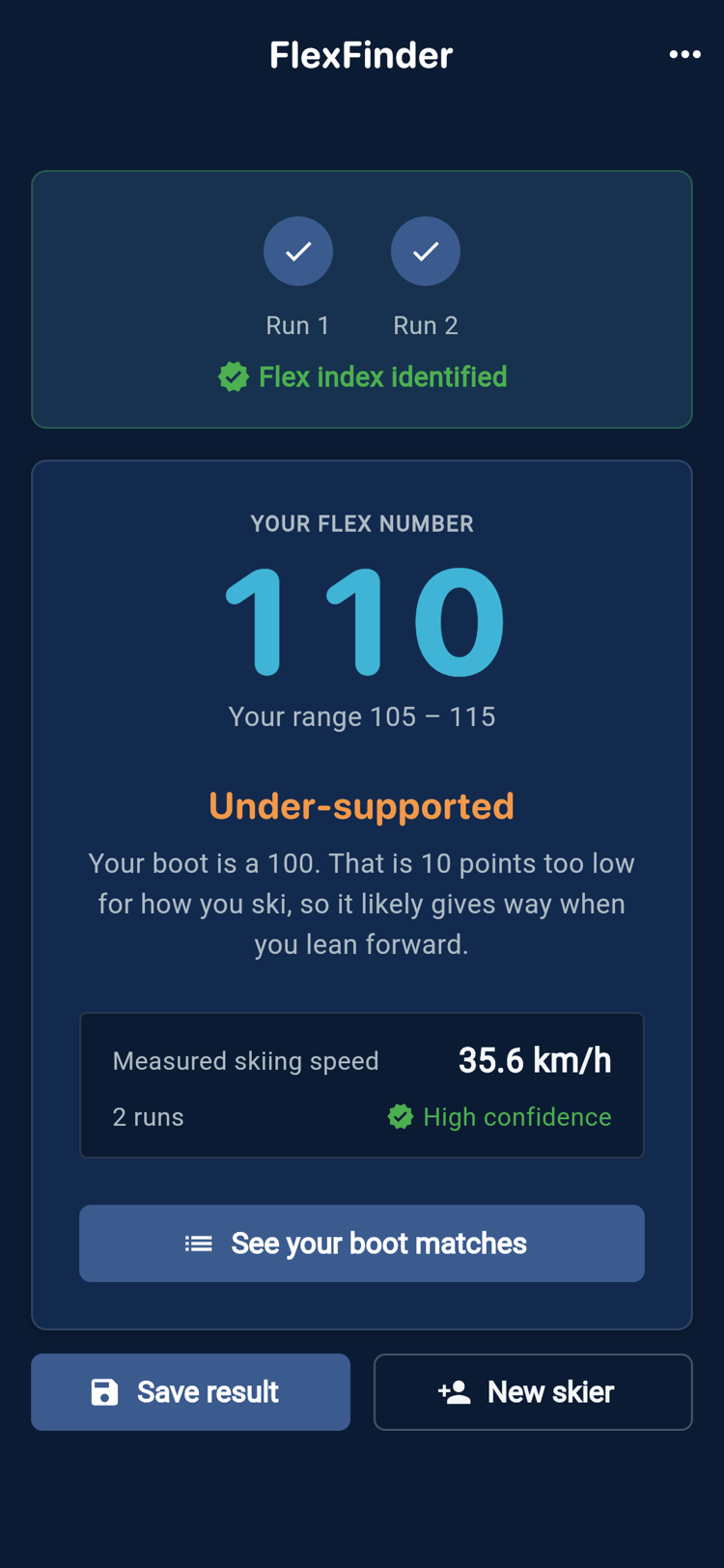
- Get your flex number with FlexFinder: two to three runs with your phone in your pocket.
- Take it to a bootfitter for the fit: length, volume and forward lean.
- Keep taking lessons with a good instructor.