Day three, and it isn't clicking
You brought someone along: a partner, or a friend who finally said yes. It's day three, you've said "get forward" again and again, and they're still on their heels.
Listen on the chairlift. A first-timer talks about sore feet, losing their balance and being scared of falling. Someone with a few winters behind them talks about being stuck on the same runs, and about the steeper slopes, icy snow or deep snow that scare them.
From the outside it can look like nerves. In my experience, a boot that doesn't hold them feeds it: with nothing holding them forward, they feel out of balance, they tense up, and every turn feels like a fall waiting to happen. Technique, confidence and conditions matter too, but the boot is the part I see people forget to check.
“If it isn't clicking, it may not be them, and it may not be you.”
What to watch and listen for
Fit is the shape: the boot's length, width and room around the foot. Flex is the number on the boot, the flex index. The right one keeps them in balance and puts their ankle bend into the tip of the ski, not into the boot.
Watch them ski, and ask how they feel.
- Sore, cold or numb feet, or a heel that lifts: usually fit.
- Toes curled up all day to keep their balance: fit or flex (a boot that's too big, or one that isn't holding them forward).
- Stuck on their heels, as if falling backwards: may be flex, too low or too high, and sometimes a boot that's too big.
- Burning thighs and cramping calves by lunch: often a flex index too low for their body.
- Skis that won't turn when they want, as if they have a mind of their own: could be fit or flex.
Too low for their body, and the boot gives way when they lean forward, leaving them on their heels. Too high, and they can't bend their ankles forward, so they end up leaning back anyway. When it's flex shows how to tell which.
Two shortcuts I'd skip
Lending them your old boots. They were chosen for your foot and your body, not theirs. If you ski on a high number, it may be too high for them; if they're taller or heavier than you, too low.
Buying by the "beginner" label. You don't choose ski boot flex by level. You choose it by physics: height, weight and how fast you ski. More in What's your level?
And if a boot hurts, don't reach for a lower number first. Foot pain is usually fit. More in Fixing the wrong problem.
Before the next day out
See a bootfitter for the fit, especially if their toes curl, their heel lifts or their feet hurt.
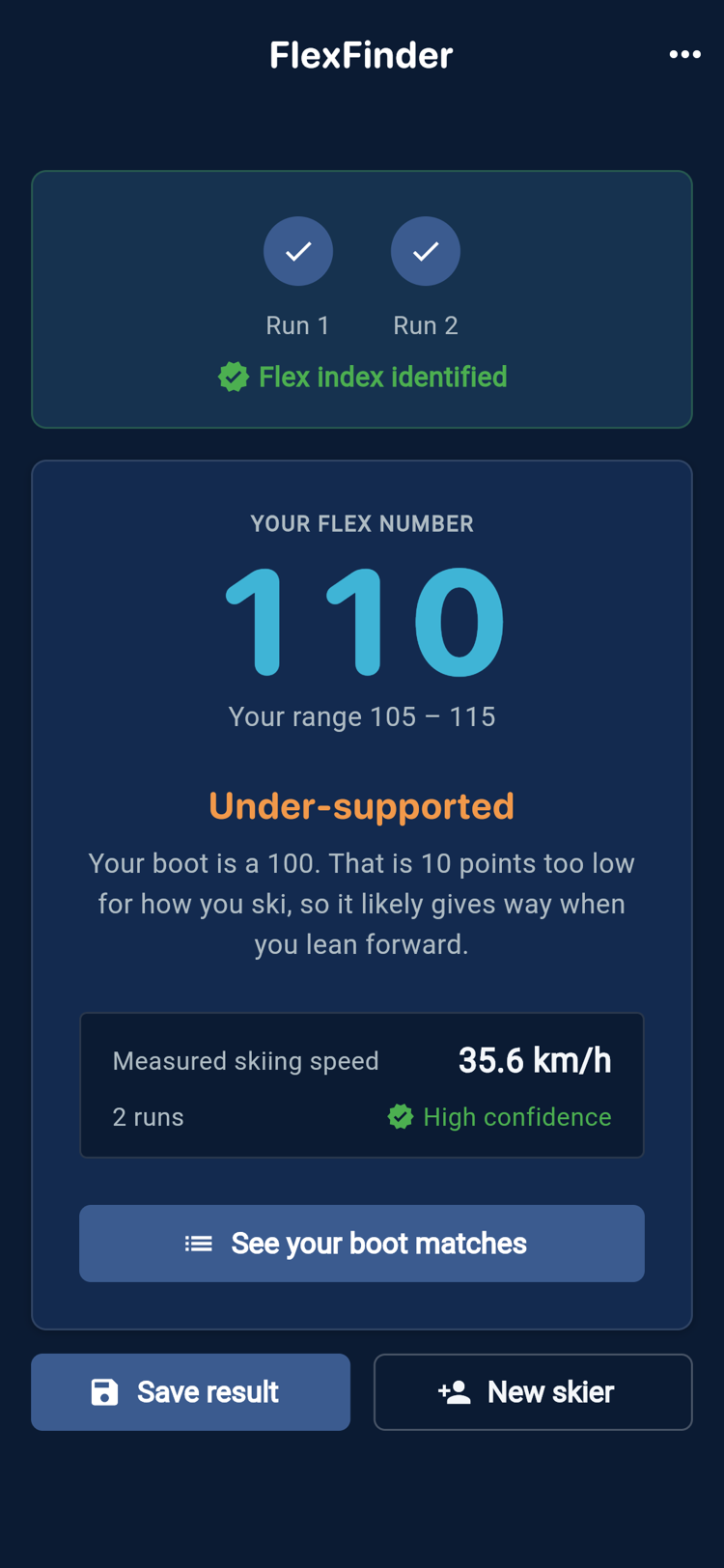
Estimate the flex index for their body with FlexFinder, an iPhone app. Enter their height, weight, ski and current boot, then they ski two to three runs with the phone in their pocket. Runs count only from 15 km/h, so a very new skier starts with the fitter and a lesson.
They get a flex number and a range, a verdict on their boot (too low, too high or right), and matches from 229 boots across 11 brands: a shortlist to try on with their bootfitter. FlexFinder estimates the flex index. It isn't a diagnosis, and it doesn't check fit.
Book a good instructor. A US ski industry study found the instructor was the biggest single influence on beginners who stayed. It also found family and friends are the main way people come into the sport, so keep skiing together.
In my experience, you can see the day a boot fits and holds them. They stop talking about their feet, the tension goes out of their legs, the skis turn when they ask, and they want one more run before the lifts close. That's what you brought them for: skiglede, the joy of skiing, and someone to share it with.